Don't Fail Your Next Final: Why Alteration Plates Get Written Up
A failed final inspection over a missing or incorrect alteration plate is one of the most avoidable setbacks on a modernization. The re-inspection has to be scheduled and paid for, the crew makes a return trip, and turnover to the owner is delayed, sometimes by weeks. Don't let one small plate cost you thousands. Get it right the first time.
The four alteration plate write-ups inspectors see most
On a modernization, the inspector looks for the alteration plate on the controller or main line disconnect and reads it against the permit. When a plate gets written up, it is almost always for one of these four reasons.
1. The wrong code edition
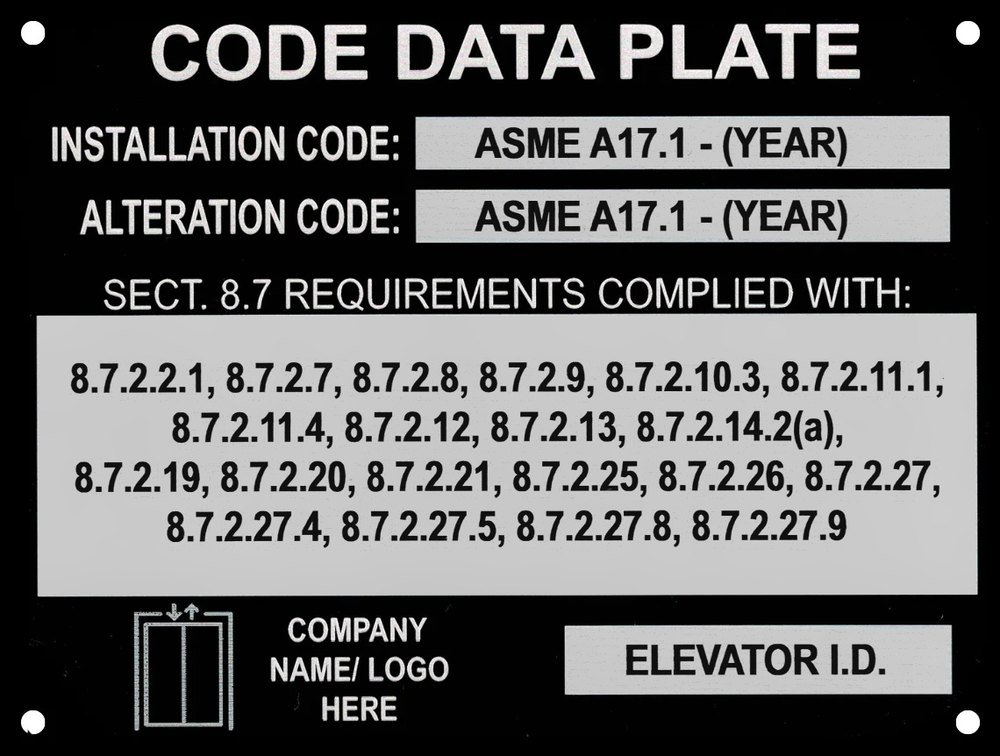
The alteration code has to be the edition the jurisdiction had adopted when the alteration was done, not the newest edition of A17.1 and not the one the crew is used to. Adoption can run years behind the current code and varies from state to state, so take the edition from the permit or the authority having jurisdiction instead of from memory. The installation code never changes: it stays the edition the unit was originally installed under (see what goes on a code data plate).
2. A vague or copied Section 8.7 list
"Section 8.7" on its own tells the inspector nothing. The plate has to list, by number, the specific requirements this alteration was performed under (for example, 8.7.2.27.4 for a controller replacement on a traction elevator), and the list has to match this job's scope, not the last job's. Electric and hydraulic units use different requirement numbers, so a traction list on a hydraulic unit is wrong from the start.
3. Earlier alterations missing
A unit that has been modernized more than once needs every alteration on record with its code edition. A plate that shows only the latest job, or a controller covered in stacked, half-legible tags, invites questions. A multi-year alteration code data plate puts the installation code and each alteration on one plate.
4. Marking that won't last
The code data plate is a data plate under the code, so the lettering has to be permanent: etched, engraved, cast or otherwise permanently applied, at least 3.2 mm (1/8 in.) high. Marker on a blank tag and stick-on paper or foil labels don't qualify, and lettering that has worn, faded or been painted over can be rejected at any inspection.
Pre-final checklist
Read the plate against this list before the inspector does:
- Installation code. The edition the unit was originally installed under, with the year.
- Alteration code. The edition the jurisdiction adopted for this alteration, usually the edition on the permit.
- Section 8.7 requirements. Every requirement this alteration was performed under, by number, from the correct electric or hydraulic list.
- SIL statement. "Installation contains SIL rated devices," on the plate or an adjacent plate, if the installation or alteration includes SIL-rated devices.
- Earlier alterations. Still on record if the unit has been altered before.
- Elevator ID. Matches the car number on the permit and the controller.
- Location. Securely attached in plain view on the controller or main line disconnect, or inside the controller where it is clearly visible with the door open.
- Marking. Permanent lettering at least 3.2 mm (1/8 in.) high.
Settle the plate at permit time
Most plate problems start because the plate is ordered last. Everything it needs is known when the permit is pulled: the installation edition from the existing plate or the unit's records, the adopted edition from the authority having jurisdiction, and the Section 8.7 requirements from the permit application or the engineer's scope. Order the plate then and it is on the controller well before the final is scheduled. A plate that arrives after the inspector does is a return trip.
How CodePlates helps
Ordering a custom alteration plate is where many of these mistakes start. Working out which Section 8.7 requirements apply, then getting every one onto the plate correctly, has traditionally meant drawings, quotes and back-and-forth with an engraver. At CodePlates the custom alteration code data plate is configured online: choose electric or hydraulic, check the requirements that apply from a list in code order, enter the installation and alteration editions and the car ID, upload a logo, and review the etch preview before you order. Codey, our online code expert, can assist with orders, help check for errors and answer any of your code-related questions 24/7. Standard orders ship in 3–4 business days, and rush production is available.
Every CodePlates plate is laser-etched into black anodized aluminum (0.040" stock, finished with 3M VHB adhesive or drilled for screws), so the lettering is in the metal, not on it. Orders are configured online and ship nationwide from Stevensville, Maryland.
Frequently asked questions
Can an elevator fail its final inspection because of the alteration plate?
Yes. Section 8.7 requires a code data plate complying with Section 8.9 whenever an alteration is made, so a missing plate, or one with the wrong code edition or an incomplete list of Section 8.7 requirements, is a deficiency the inspector can write up. Many jurisdictions charge for the re-inspection, and turnover usually waits until the unit passes.
Which code edition goes on the alteration line?
The edition the authority having jurisdiction had adopted at the time of the alteration, which is usually the edition on the permit. It is not necessarily the newest edition of ASME A17.1.
Where do I find the Section 8.7 requirements for my job?
On the alteration permit application or in the engineer's scope of work. The CodePlates order form lists every requirement by number for electric and hydraulic units so you can check off the ones that apply, and Codey can help if you're not sure.
Does every alteration need its own plate?
Every alteration has to be recorded with its code edition and the Section 8.7 requirements it was performed under. That can be an alteration plate added next to the existing code data plate, or a single multi-year plate that records the installation code and each alteration.
This guide is general information for the elevator trade, not code text or legal advice. Requirements vary by jurisdiction and code edition — always confirm with the ASME A17.1 edition adopted by your Authority Having Jurisdiction. Updated October 2026.