CodePlates › Code Reference
Elevator Code Reference
Plain-language guides to what ASME A17.1 actually requires on the metal in the machine room — written for mechanics, inspectors, consultants, and building owners who need the right plate, correctly worded, the first time.
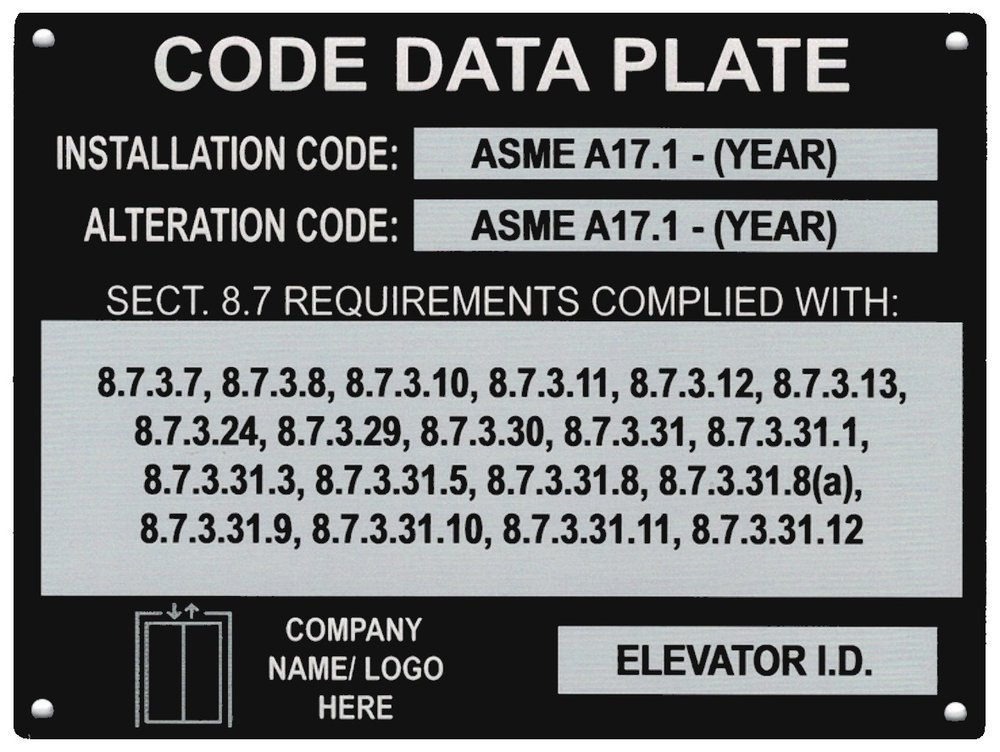
Elevator Alteration Tags Explained: What ASME A17.1 Section 8.7 Requires
What counts as an alteration under Section 8.7, what the elevator alteration tag must record, electric vs. hydraulic, blank vs. custom-etched, and an ordering checklist.
Read the guide →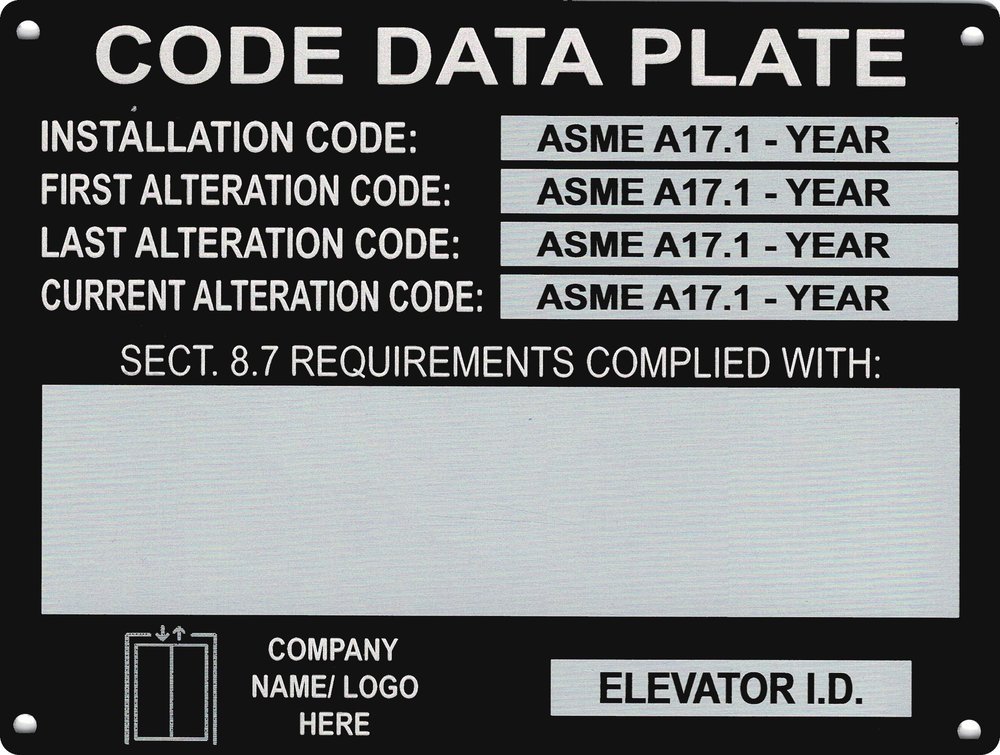
What Goes on an Elevator Code Data Plate?
Field-by-field: what the code data plate must show, where it mounts, the lettering and material rules, and how to replace a missing or illegible one.
Read the guide →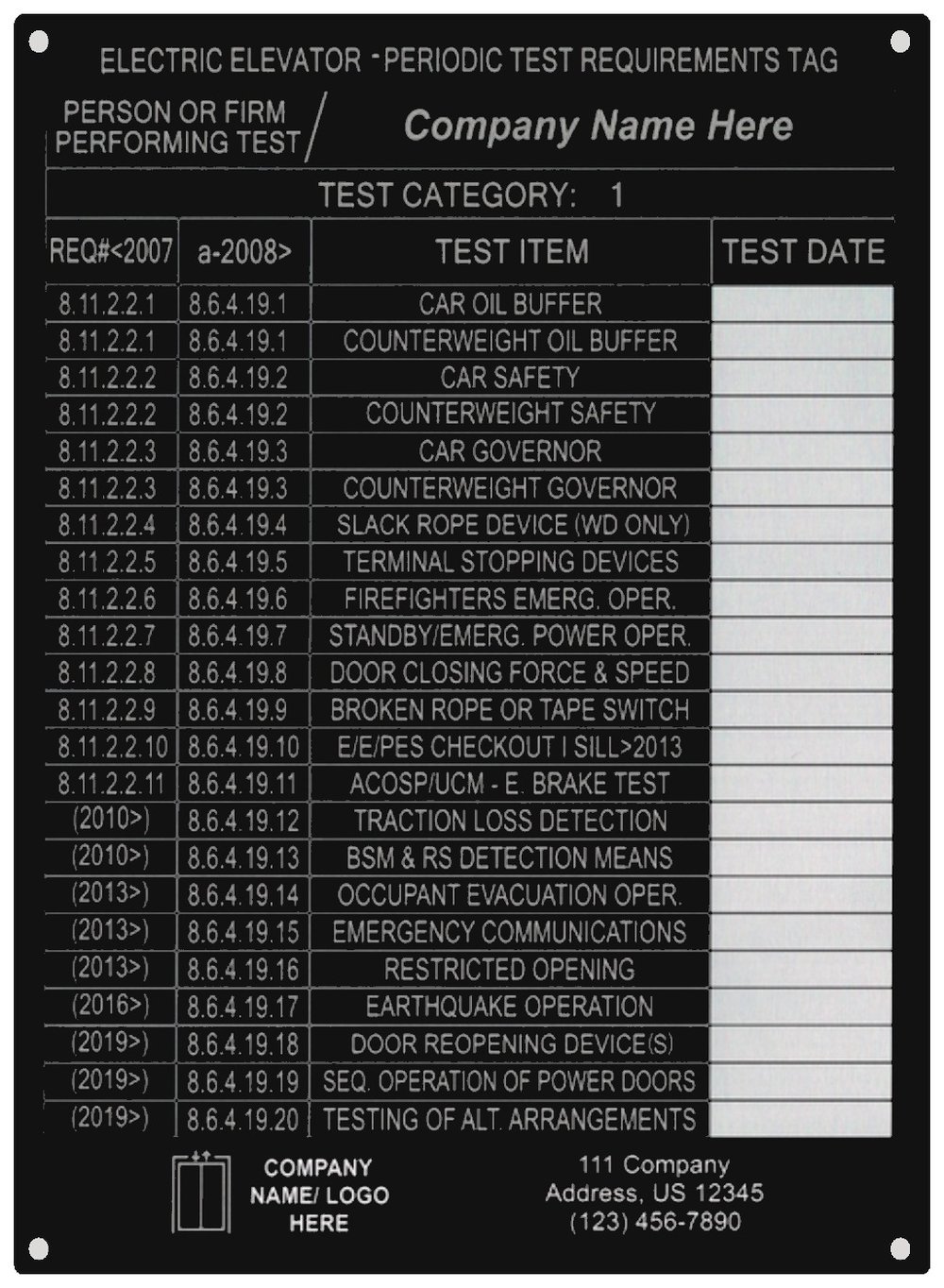
Annual, Cat 1, and Cat 5: Elevator Test Tags Explained
Category 1, 3, and 5 tests explained, which tag records which test, what has to be on a test tag, and the material and mounting rules for marking tags.
Read the guide →Why this exists
Most write-ups involving data plates and tags are not about the elevator — they are about a plate that is missing, illegible, mounted in the wrong place, or missing a required field. The code language is scattered across Sections 2.16, 8.6, 8.7, 8.9, 8.10, and 8.13, and the definitions matter: a code data plate is not a capacity plate, an elevator alteration tag is part of the code data plate, and a test tag follows different lettering rules than either. These guides pull the requirements together in one place, with a photo of a compliant plate and a checklist of the fields for each.
Every guide is checked against the current ASME A17.1-2022/CSA B44:22 text and links to the matching CodePlates product, so once you know what you need you can order it in minutes.
This guide is general information for the elevator trade, not code text or legal advice. Requirements vary by jurisdiction and code edition — always confirm with the ASME A17.1 edition adopted by your Authority Having Jurisdiction. Updated September 2026.